


At a glance
- HRT is the most effective treatment for severe symptoms — but requires a prescription and has contraindications
- Phytotherapy (sage, red clover, black cohosh) reduces hot flashes by 17 to 25% vs placebo according to Cochrane (2013)
- Multi-active dietary supplements combine isoflavones, magnesium, vitamin D3, and collagen for global support without a prescription
- 75% of women experience hot flashes during menopause — and the median duration of symptoms is 7 years (SWAN Study)
- No natural treatment is a substitute for HRT for severe forms — but for the majority of women, they are sufficient
- This article is for informational purposes only and does not replace personalized medical advice.
Table of Contents
Understanding the hormonal changes of menopause
Menopause is not a disease — it's a biological transition inherent in female physiology. It occurs on average at 51 years old in France, after 12 consecutive months of amenorrhea, and results from a gradual decline in estradiol and progesterone production by the ovaries. It is this drop — and especially its fluctuations during perimenopause — that explains the diversity and intensity of symptoms: hot flashes, sleep disturbances, brain fog, vaginal dryness, joint pain.
Before choosing a therapeutic approach, it is essential to qualify your symptoms. Treatments are not suitable for the same profiles — and their benefit/risk ratio varies considerably depending on the intensity of what you are experiencing.
Symptoms that require active management
Not all symptoms require medication. But certain signs warrant a consultation and serious therapeutic consideration: hot flashes occurring more than 7 times a day, night sweats chronically disrupting sleep, painful vaginal dryness, depressive syndrome associated with hormonal transition, or progressive joint and bone symptoms. Knowing the full spectrum of possible manifestations is the first step to acting knowledgeably.

Hormone Replacement Therapy (HRT): real benefits and contraindications
Menopausal hormone therapy (MHT) — formerly called HRT — is the most studied and effective approach for severe vasomotor symptoms. It involves providing exogenous estrogens (and often progesterone or a progestin) to compensate for ovarian decline.
What MHT really does
Clinical data is solid: a large analysis published in The Lancet (2019) involving 58 studies and over 100,000 women confirmed its major efficacy on hot flashes, night sweats, and the prevention of postmenopausal osteoporosis. For women with debilitating symptoms, it remains the reference treatment. The ANSM (French National Agency for Medicines and Health Products Safety) has recommended since 2021 that MHT be reserved for women whose symptoms significantly impair their quality of life, at the lowest effective dose and for the shortest necessary duration.
Documented risks — read the studies without panic
The WHI (Women's Health Initiative, 2002) study caused lasting concern by identifying a slight increase in breast cancer risk with certain formulations. Scientific re-evaluations over the past 20 years have significantly qualified these conclusions: risks depend on the type of hormone used (synthetic vs. bioidentical), the duration of treatment, the age of initiation, and the patient's individual profile. Starting within 10 years of menopause — the "therapeutic window" — presents a significantly more favorable benefit/risk ratio.
MHT remains indicated for bothersome climacteric symptoms when the individual benefit/risk ratio is favorable. It is not recommended for primary preventive purposes. Its initiation requires a medical consultation, a complete clinical examination, and an evaluation of personal and family history. The transdermal route (patch, gel) presents a lower thromboembolic risk than the oral route.
Who should not take MHT?
Hormone therapy is contraindicated in cases of personal history of breast or endometrial cancer, venous thromboembolic disease, severe ischemic heart disease, recent stroke, or during pregnancy. These contraindications affect a significant proportion of perimenopausal women, which explains the growing interest in natural alternatives — not out of ideology, but out of medical necessity.
Phytotherapy for Menopause: Sage, Red Clover, and Black Cohosh
Phytotherapy represents the first line of recourse for women who wish to avoid MHT or who have contraindications. Scientific data is solid for some plants — modest for others. Here is the honest assessment, far from marketing promises.

What clinical trials really say
The most comprehensive Cochrane review on the subject (Lethaby et al., 2013, 43 trials, 4,364 women) concludes that phytoestrogens — soy isoflavones and red clover — reduce the frequency of hot flashes by approximately 17% compared to placebo. The efficacy is modest but reproducible, and the effect is more pronounced in women experiencing more than 5 hot flashes per day. For black cohosh, the EMA recognizes its well-established traditional use for mild to moderate symptoms over a limited duration.
These results are not "miraculous" — and beware of formulations that claim to be. But they represent a real, clinically reproducible benefit, with an excellent safety profile for women without particular hormonal history.
Phytoestrogens (red clover and soy isoflavones) should be used with caution in cases of personal or family history of hormone-dependent cancer. Common sage is contraindicated in cases of epilepsy. Consult your doctor before combining with any ongoing treatment.
Clinically Dosed Dietary Supplements: the Third Way
Beyond simple phytotherapy and MHT, a third approach has developed: multi-active dietary supplements, formulated to address menopause in its entirety — not just hot flashes, but also bone health, muscle tone, cognitive vitality, and skin quality.
How is it different from phytotherapy alone?
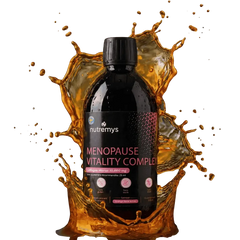
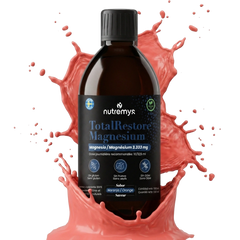
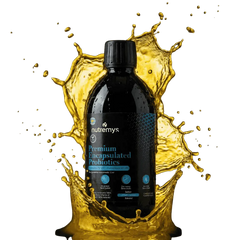
Standard phytotherapy offers one or two plants at a fixed dose. Clinically formulated dietary supplements combine several synergistic active ingredients whose dosages are aligned with clinical study data. Nutremys' approach, for example, combines soy and red clover isoflavones with bisglycinate magnesium, vitamin D3, vitamins B6 and B12, zinc, and hydrolyzed marine collagen — each active ingredient at a scientifically documented dose.
🌱 Isoflavones (soy + red clover)
Mild modulators of ER-β receptors. Documented reduction of hot flashes. The EFSA (2015) validates their safety up to 150 mg/day in healthy menopausal women.
🔋 Magnesium bisglycinate
Contributes to the normal functioning of the nervous system and reduces fatigue (EFSA-approved claim). The bisglycinate form is better absorbed and has no laxative effect at recommended doses.
☀️ Vitamin D3
Essential for bone mineralization, immunity, and mood. 80% of women aged 50+ in France have a deficiency according to ANSES data. Its receptors are present throughout the cerebral cortex.
💧 Hydrolyzed marine collagen
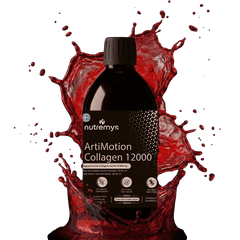
Supports skin, joint, and bone structure. Menopause accelerates dermal collagen degradation by 30% in the first 5 years. Hydrolyzed forms (MW < 5,000 Da) offer the best bioavailability.
Why the liquid format optimizes absorption
Liquid supplements have superior bioavailability to capsules and tablets for most nutritional active ingredients. Absorption begins as soon as they come into contact with the oral mucosa, and passage through the digestive wall is faster. For active ingredients such as magnesium, B vitamins, or hydrolyzed collagen, the liquid form can increase assimilation by 20 to 40% according to available comparative data. This is particularly relevant after age 50, when gastric acidity and digestive efficiency naturally decrease.
“What I appreciate about the multi-active approach is that it addresses the whole woman — not just an isolated symptom. Menopause is a systemic transformation. A well-constructed formula can simultaneously support the nervous system, bones, skin, and gentle hormonal balance — without a prescription and without the risks of MHT for women who can do without it.”
Comparison Table: HRT, Phytotherapy, and Dietary Supplements
This table summarizes the essential differences between the three approaches. It is designed to structure your thinking — not to replace a medical consultation. Each situation is unique, and your gynecologist remains the best contact person to personalize your approach.

| Criterion | HRT / MHT | Phytotherapy | Multi-active Supplements |
|---|---|---|---|
| Hot Flash Efficacy | ⭐⭐⭐⭐⭐ High (80–95%) | ⭐⭐⭐ Moderate (17–25%) | ⭐⭐⭐ Moderate to good |
| Medical Prescription | Yes — mandatory | No | No |
| Major Contraindications | Breast/endometrial cancer, history of VTE, ischemic heart disease | Epilepsy (sage), hormonal history (isoflavones) | Soy allergy, pregnancy |
| Onset of Action | 2 to 4 weeks | 4 to 12 weeks | 4 to 8 weeks |
| Bone Health | ✅ Documented osteoporosis prevention | ⚠️ Modest effect | ✅ Vitamin D3 + collagen + isoflavones |
| Cognition / Energy | Partial (depends on formulation) | Not documented | ✅ Magnesium + B6/B12 + D3 |
| Skin Health | Partial | Not documented | ✅ Hydrolyzed marine collagen |
| Medical Follow-up Required | Yes — regular mandatory | Recommended | Optional |
| Who is it for? | Severe, disabling symptoms, no contraindications | Mild to moderate symptoms, natural preference | Daily holistic support, any mild to moderate intensity |
Which menopause treatment should you choose based on your profile?
Your choice should take into account the intensity of your symptoms, your medical history, your beliefs, and your life plans. This profile guide is a starting point — not a prescription.
🔴 Your symptoms are severe or disabling
Hot flashes > 7 per day, night sweats severely disrupting sleep, painful vaginal dryness, depressive syndrome related to hormonal transition: HRT should be seriously discussed with your doctor. Its benefit-risk ratio, within the first 10 years post-menopause and in the absence of contraindications, is often favorable. Do not refuse effective help for fear of numbers that may not apply to your individual profile.
🟡 You prefer to avoid hormones
Your choice is between targeted phytotherapy (red clover, black cohosh) and multi-active supplements. If your symptoms are mild to moderate, plants may be sufficient. Enrich them with a diet rich in natural isoflavones (tofu, edamame, miso) and regular physical activity. For more comprehensive support, night sleep disturbances and bone health will benefit from a multi-active formula.
🟢 You are looking for daily holistic support
A multi-active food supplement represents the most versatile solution for supporting the menopausal transition holistically. It simultaneously addresses hot flashes, sleep, bone health, muscle tone, skin quality, and mental energy — without a prescription, with an excellent safety profile for women without serious contraindications.
Some women get the best of both worlds: low-dose HRT for 2–3 years for acute symptoms, combined with food supplements for long-term bone, cognitive, and skin support. This sequential approach is clinically validated — talk to your gynecologist about it.
Frequently asked questions about natural menopause treatments
Scientific sources
- Lethaby A. et al. — Phytoestrogens for menopausal vasomotor symptoms, Cochrane Database Syst Rev, 2013 — Cochrane Library
- EFSA Panel on Food Additives and Nutrient Sources — Risk assessment for peri- and post-menopausal women taking food supplements containing isolated isoflavones, EFSA Journal, 2015 — efsa.europa.eu
- HAS / ANSM — Hormone therapy for menopause — update of recommendations, 2021 — has-sante.fr
- Collaborative Group on Hormonal Factors in Breast Cancer — Type and timing of menopausal hormone therapy and breast cancer risk, The Lancet, 2019 — The Lancet
- Freeman E.W. et al. — Duration of menopausal hot flushes and associated risk factors, SWAN Study, OB/GYN, 2011 — PubMed
- EMA Committee on Herbal Medicinal Products — Community herbal monograph on Cimicifuga racemosa rhizoma, 2018 — ema.europa.eu
31 active ingredients. One liquid formula. Designed for you.
Nutremys Menopause Vitality Complex combines natural isoflavones, 10,000 mg marine collagen, magnesium bisglycinate, and vitamins D3 + B to support your menopausal transition — without synthetic hormones, without prescription.
Discover Menopause Vitality ComplexThe information shared on this blog is for educational and informational purposes only. It does not replace medical consultation, diagnosis or treatment prescribed by a healthcare professional. If you have symptoms, are undergoing treatment or are pregnant, consult your doctor before modifying your diet or starting supplementation. Nutremys LAB food supplements should not replace a varied, balanced diet or a healthy lifestyle.
