


Menopause Symptoms:
Understand, Recognize, Act
From hot flashes to osteoporosis, from brain fog to vaginal dryness — everything you need to know about the 12 menopausal symptoms, their hormonal causes, and validated solutions.
What this guide on menopause symptoms contains
Menopause symptoms affect 87% of women — yet 80% do not seek medical advice
Are you experiencing hot flashes, sleep disturbances, unexplained fatigue, or brain fog? These are menopause symptoms — a physiological reality that all women will go through, yet it remains surrounded by taboos and medical silence. Only 20% of women suffering from vasomotor symptoms consult a doctor.
This guide deciphers the 12 most frequent symptoms of menopause, their biological mechanisms linked to the drop in estrogen, and the available solutions — from hormone therapy to validated dietary supplements, as well as lifestyle adjustments. It is based on data from the CNGOF, NAMS, and published clinical studies.
Perimenopause and Menopause: The Exact Definitions of Symptoms

The terms perimenopause, menopause, and climacteric are often confused — wrongly so. Each denotes a distinct reality, with different implications for your medical follow-up and symptom management.
Perimenopause
A transitional phase during which the ovaries begin to produce irregular amounts of estrogen and progesterone. Menstrual cycles become irregular, and the first menopause symptoms appear — often mistaken for stress or fatigue. This is when the body begins to change, well before the definitive cessation of periods. An appropriate nutritional support can already make a difference.
Menopause
Medically defined as the absence of menstruation for 12 consecutive months, in the absence of pathological cause. It is therefore diagnosed only in retrospect. Menopause occurring before age 40 is called "premature" (premature ovarian insufficiency) and requires specific management.
Climacteric & Climacteric Syndrome
The climacteric refers to the entire period of hormonal transition. Climacteric syndrome includes all the signs and symptoms that accompany it: vasomotor (hot flashes, sweats), genital, psychological, bone. These symptoms can last for several years — some women experience persistent vasomotor symptoms for more than 10 years.
Estrogens and Menopause Symptoms: Why Everything Is Connected
Estrogens act on virtually all body systems — well beyond reproduction. Understanding their extended role helps explain why menopause symptoms are so varied. The drop in collagen production is a striking example: -30% in 5 years.
Brain & Mood
Estrogens modulate serotonin, dopamine, and acetylcholine — neurotransmitters for mood, memory, and concentration. Their decline explains depression, irritability, and brain fog.
Bone Tissue
They inhibit osteoclasts and stimulate osteoblasts. Without them, bone resorption accelerates — up to -3% density per year. Supplementation with vitamin D and calcium becomes essential.
Cardiovascular System
They maintain vessel elasticity and regulate cholesterol. After menopause, women's cardiovascular risk joins that of men.
Skin & Mucous Membranes
They stimulate collagen production, maintain skin hydration, and preserve the integrity of vaginal and urinary mucous membranes.
Thermoregulation
They participate in temperature regulation via the hypothalamus. Their fluctuation disrupts this mechanism and causes hot flashes.
Muscle Mass
Estrogens support muscle protein synthesis. Their decline contributes to sarcopenia from the age of fifty.
Supporting Menopause with the Right Active Ingredients
Looking for the best menopause supplement? Read our scientific guide to the 6 essential ingredients.
Read the Menopause Supplements Guide →The 12 Most Frequent Menopause Symptoms
Every woman experiences menopause differently. Some go through the transition with almost no symptoms; others experience several simultaneously. Here is a complete map of possible manifestations, with their estimated frequency.
Hot Flashes
Sudden sensation of intense heat, skin redness, sometimes sweats. Duration: 30 sec to 5 min.
80% of womenSleep Disturbances
Insomnia, night awakenings related to hot flashes, non-restorative sleep.
60% of womenMood Swings
Irritability, anxiety, sadness, depressive episodes. Direct link to serotonin fluctuations.
50% of womenVaginal Dryness
Thinning and dryness of the vaginal mucosa. Painful intercourse.
50% of womenBrain Fog
Difficulty concentrating, forgetfulness, cognitive slowness. Often temporary but unsettling.
60% of womenDecreased Libido
Decrease in sexual desire, linked to dryness, fatigue, and hormonal changes.
~80% of womenBone Loss
Accelerated bone resorption. Risk of osteopenia then osteoporosis in the medium term.
All womenSkin Changes
Loss of elasticity (-30% collagen in 5 years), more pronounced wrinkles, dryness.
All womenWeight Gain
Fat redistribution to the abdomen, metabolic slowdown.
Very frequentUrinary Incontinence
Leaks during exertion or urgency. Linked to atrophy of pelvic support tissues.
40% of womenHair Loss
Hair thinning, loss of hair density.
FrequentJoint Pain
Stiffness and joint pain, often in the morning. Little-known but documented symptom.
Little knownHot Flashes, Insomnia, and Other Menopause Symptoms in Detail
Click on each symptom to access its biological mechanism, concrete manifestations, and associated medical recommendations.

Hot flashes are the most characteristic symptom of menopause. They manifest as a sudden sensation of intense heat, usually starting from the chest or face, accompanied by visible skin redness and often sweating.
- Estrogen drop destabilizes the hypothalamic thermostat
- Hypothalamus detects "false heat" and triggers a cooling response
- Sudden peripheral vasodilation → felt heat surge
- Serotonin and norepinephrine imbalances amplify the phenomenon
- Breathable natural fiber clothing
- Avoid alcohol, caffeine, spices, and very hot foods
- Regular exercise (reduces frequency by 30-50%)
- HRT for severe symptoms — under medical supervision
Sleep is one of the first casualties of the menopausal transition. Three distinct mechanisms feed into each other: night sweats, decreased progesterone (a naturally sedative hormone), and mood disturbances.
- Night sweats → repeated awakenings
- Progesterone drop → loss of natural sedative effect
- Decrease in melatonin with age
- Anxiety and mild depression
- Sleep apnea → more common after menopause
- Fixed evening ritual: same time, same sequence
- Cool bedroom (18-19°C)
- Cognitive-Behavioral Therapy for Insomnia (CBT-I)
- Magnesium bisglycinate in the evening
- Chamomile, valerian, lemon balm
Hormonal fluctuations during perimenopause are one of the periods of greatest psychological vulnerability. Estrogens directly modulate serotonin, dopamine, and GABA receptors.
- Unusual irritability and impatience
- Generalized anxiety or panic attacks
- Crying for no apparent reason
- Loss of interest in previously enjoyed activities
- Feeling of emptiness or loss of identity
- Psychotherapy (CBT — proven effectiveness)
- SSRIs/SNRIs — also effective for hot flashes
- HRT — stabilizes estrogen fluctuations
- Regular exercise — natural antidepressant
- Magnesium bisglycinate + omega-3
Vaginal dryness is grouped under the term Genitourinary Syndrome of Menopause (GSM). Unlike hot flashes, GSM symptoms progressively worsen if left untreated. Vaginal probiotics (Lactobacillus) can help restore flora.
- Vaginal dryness, burning, itching
- Painful intercourse (dyspareunia)
- Recurrent vaginal and urinary infections
- Urgent and frequent urination
- Hyaluronic acid vaginal moisturizers
- Vaginal probiotics (Lactobacillus)
- Topical vaginal estrogens (by prescription)
- Vaginal DHEA (Intrarosa)
- Vaginal CO2 laser
Osteoporosis is one of the most serious consequences. It doesn't hurt until a fracture occurs. Over 10 years, a woman can lose up to 30% of bone density. The trio of calcium + vitamin D + collagen forms the foundation of prevention.
- Early menopause (before 45)
- Family history of osteoporosis
- Prolonged corticosteroid therapy
- Smoking and alcohol
- Low BMI · Sedentary lifestyle
- Resistance exercise (strength training)
- Calcium: 1,000–1,200 mg/day
- Vitamin D: 800–2,000 IU/day
- Hydrolyzed marine collagen: 5-10 g/day
- Bone densitometry from age 60
Weight gain is not inevitable — but the redistribution of fat to the abdomen is almost universal. This change is directly linked to the drop in estrogen.
- Fat storage shifted towards the abdomen
- Increased insulin resistance
- Metabolic slowdown (muscle loss)
- Sleep disorders → increased ghrelin
- Low glycemic index diet
- Resistance exercise 2-3x/week
- Limitation of sugar and ultra-processed foods
- Sufficient protein (1.2 g/kg/day)
HRT and Menopause Symptom Treatments: All Options
There is no universal treatment. Each woman has a unique profile. Here are the main options — their indications, benefits, and limitations.
Hormone Therapy (HRT)
Most effective treatment for severe vasomotor symptoms.
- Reduces hot flashes by 80-90%
- Improves sleep, mood, libido
- Protects bone density
- Contraindicated if hormone-dependent cancer
Phytoestrogens
Plant-based molecules from soy, red clover. For mild to moderate symptoms.
- Reduce hot flashes by 20-40%
- Available without prescription
- Variable bioavailability
Antidepressants (SSRIs/SNRIs)
Non-hormonal alternative for hot flashes and mood disorders.
- Effective for hot flashes AND mood
- Option if HRT is contraindicated
- Possible side effects
Lifestyle & Nutrition
Foundation of all treatment. Exercise, diet, sleep, and stress management.
- Reduces hot flashes by 30-50%
- Protects bones, heart, and muscles
- No contraindications
Psychotherapy & CBT
Proven effectiveness for mood, insomnia, and perception of hot flashes.
- Reduces anxiety and depression
- CBT-I highly effective for insomnia
- Lasting benefits
Local Treatments (GSM)
Local estrogens, vaginal DHEA, CO2 laser. Minimal systemic absorption.
- Vaginal estrogens: rapid effectiveness
- Vaginal DHEA: also improves libido
- CO2 laser: hormone-free option
8 validated natural solutions for menopause symptoms
For mild to moderate symptoms or as a complement to medical treatment — these 8 levers have been the subject of positive clinical studies. Find all dosages in our guide to essential supplements after 50.
Resistance exercise
Strength training 2-3x/week. Protects bones, reduces abdominal fat, reduces hot flashes by 30-50%.
Anti-inflammatory diet
Vegetables, berries, fatty fish, legumes, olive oil.
Quality isoflavones
Soy, red clover — 40-80mg/day of standardized isoflavones.
Sleep hygiene
Cool bedroom, fixed schedule, no screens after 9 pm, chamomile/lemon balm tea.
Vitamin D & sun
20 min of sun/day. Vitamin D3 supplement 1000-2000 IU/day if dosage is insufficient.
Mindfulness & stress
Meditation, yoga, heart coherence. Reduces cortisol.
Microbiota & probiotics
Optimizes the bioavailability of phytoestrogens. Targeted probiotics for vaginal and intestinal flora.
Marine collagen & magnesium
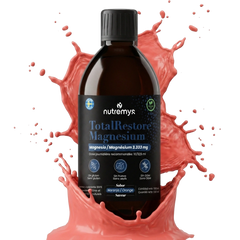
Hydrolyzed collagen for skin and joints. Magnesium bisglycinate for the nervous system and sleep.
FAQ — Your questions about menopause symptoms
Medically sound answers to the most frequently asked questions.
cngof.fr
menopause.org
imsociety.org
doi.org/10.3390/nu10010097
efsa.europa.eu
santepubliquefrance.fr
Support your body through every stage of transition
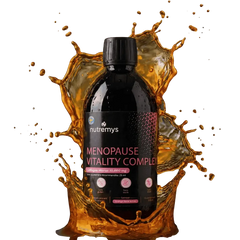
10,000 mg marine collagen, magnesium, vitamin D and 23 targeted active ingredients for women aged 45+ who want to navigate this period with strength and clarity.
Discover Menopause Vitality Complex →

Gynecologist practicing in Paris for 18 years, specialized in women's hormonal health, perimenopause and menopause. At Nutremys LAB, she brings her medical perspective to every product we offer.
Learn more →Related articles

The information shared on this blog is for educational and informational purposes only. It does not replace medical consultation, diagnosis or treatment prescribed by a healthcare professional. If you have symptoms, are undergoing treatment or are pregnant, consult your doctor before modifying your diet or starting supplementation. Nutremys LAB food supplements should not replace a varied, balanced diet or a healthy lifestyle.
