




Which Magnesium to Choose? Complete Guide to 7 Forms, Dosages, and When to Take It
Bisglycinate with 80% absorption or oxide with 4% — the form you choose changes everything. Scientific comparison of the 7 forms of magnesium, the best magnesium for menopause, and when to take it for optimal effect.
Not all forms of magnesium are created equal — absorption varies from 4% to 80%
Which magnesium to choose from the dozens of forms available? The answer depends on your goal: sleep, stress, bone health, cognition, or transit. But one fact is universal: the form of magnesium determines the amount actually absorbed by your body — and the difference is huge. 300 mg of magnesium oxide actually provides you with ~12 mg after absorption. 150 mg of bisglycinate provides you with ~120 mg.
This guide compares the 7 main forms of magnesium, identifies the best magnesium for menopause, and explains when and how to take it to get the most benefits.
Why magnesium is vital after 40 and during menopause

Magnesium is involved in more than 300 enzymatic reactions in the body. It is essential for energy production, muscle contraction, nervous system function, sleep quality, and maintaining bone density. EFSA officially recognizes its roles in reducing fatigue, normal nervous system function, and maintaining normal bones.
The problem? 77% of French women do not meet the recommended magnesium intake (SU.VI.MAX study). And the situation worsens after 40: intestinal absorption decreases with age, some common medications (PPIs, diuretics) deplete reserves, and menopause accelerates magnesium loss due to hormonal fluctuations.
Magnesium is the essential cofactor for vitamin D: without it, vitamin D remains in its inactive form and cannot fulfill its role in calcium absorption. It's the complete chain: magnesium → activates vitamin D → allows absorption of calcium → which binds to the bone collagen framework. Breaking one link in this chain compromises the entire structure.
The 7 forms of magnesium compared: bioavailability, tolerance, and uses
Here is a comparison of the seven most common forms of magnesium, ranked by decreasing bioavailability. The form you choose directly determines the effectiveness of your supplementation.
Sleep, stress, nervous system
The best choice
Transit, energy
Good option
Fatigue, muscles
Cellular energy
Cognition, memory
Brain fog
Cardiovascular
Palpitations
Variable mix
Maintenance cure
Laxative effect
To avoid
🏆 Magnesium Bisglycinate — the absolute benchmark
Bisglycinate (or glycinate) is a chelated form: magnesium is bound to two glycine molecules, an amino acid that itself has relaxing properties on the nervous system. The result: approximately 80% bioavailability, excellent digestive tolerance (zero laxative effect) and a double benefit thanks to glycine. It is the recommended form for stress, sleep, anxiety, and cramps. If you only remember one form: this is it.
🍋 Magnesium Citrate — the good versatile alternative
Citrate offers correct bioavailability (~35%) and a slight stimulating effect on transit — making it an interesting choice for people prone to constipation. Citric acid, once metabolized, has alkalinizing properties. Less suitable for sleep than bisglycinate, it remains a good option for an energetic maintenance cure or general remineralization.

🍎 Magnesium Malate — for cellular energy
Malate combines magnesium with malic acid, an intermediate in the Krebs cycle (cellular energy production). This form is often recommended for chronic fatigue and muscle pain. Its bioavailability is correct (~30%) and its digestive tolerance is good. Less effective than bisglycinate for sleep, but interesting as a complement to regular physical activity.
🧠 Magnesium Threonate — the magnesium that crosses the brain barrier
L-threonine magnesium is the only form shown to cross the blood-brain barrier and increase magnesium concentrations in the brain. A randomized controlled trial (Hausenblas et al., 2024) on 76 adults showed significant improvement in sleep quality and daytime functioning after only 3 weeks. A second trial (Lopresti & Smith, 2025) on 100 adults confirmed improvements in cognition, working memory, and reaction time. This form is particularly relevant for menopause brain fog.
❤️ Magnesium Taurate — the cardiovascular choice
Taurate combines magnesium with taurine, an amino acid that supports heart function and blood pressure regulation. This form is recommended for women with palpitations, hypertension, or increased cardiovascular risk — a particularly relevant issue after menopause, when estrogen protection disappears.
🌊 Marine Magnesium — the false natural friend
Marine magnesium is extracted from seawater and contains a mixture of magnesium salts (often a lot of oxide). Its bioavailability is moderate (20-30%) and varies considerably depending on the product. It may be suitable for a short maintenance cure, but it is significantly inferior to bisglycinate for regular supplementation. Be careful of frequent digestive issues related to the presence of oxide.
⚠️ Magnesium Oxide — the false good plan to avoid
Magnesium oxide is the cheapest form — and the least effective. With a bioavailability of only 4%, a 300 mg oxide tablet actually provides you with only ~12 mg of usable magnesium. The rest causes a water draw in the intestine, leading to a pronounced laxative effect. Despite its high elemental magnesium content (60%), it's a trap: never rely on the total dosage displayed without checking the form.
Actual absorbed magnesium = elemental content × bioavailability. A bisglycinate containing 150 mg of elemental magnesium at 80% bioavailability provides you with ~120 mg usable. An oxide containing 300 mg of elemental magnesium at 4% provides you with only ~12 mg. Bisglycinate at half the displayed dosage gives 10 times more real magnesium. This is why the form matters as much — if not more — than the dosage on the label.
What is the best magnesium for menopause?
The answer is clear: magnesium bisglycinate is the most suitable form for menopause. And the evidence is accumulating.

The pilot study by Park et al. (2011) conducted on 29 postmenopausal women with breast cancer showed that 400 mg/day of magnesium supplementation for 4 weeks reduced the frequency of hot flashes by 41.4% and their intensity by 50%. A promising alternative for women who cannot take HRT.
The study by Grenade (2020) on 52 postmenopausal women demonstrated that 500 mg/day of magnesium for 8 weeks significantly improved vitamin D status — even without additional D3 intake. Magnesium is the essential cofactor for converting vitamin D to its active form (calcitriol).
The controlled trial by Hausenblas et al. (2024) showed that magnesium L-threonate significantly improved deep sleep quality and daytime functioning after 3 weeks. Bisglycinate, thanks to glycine, offers similar benefits for relaxation and falling asleep.
A systematic review published in Nutrients (Boyle et al., 2017) analyzed all studies on magnesium and anxiety. Conclusion: magnesium supplementation shows a positive effect on subjective anxiety and stress, particularly in individuals with increased vulnerability — which includes women in perimenopause and menopause, a period of significant neurotransmitter fluctuation.
Activates vitamin D into calcitriol
Allows intestinal absorption of calcium
Binds to the organic bone matrix
The matrix on which calcium is deposited
Complete synergy for bone health
Choice #1: Magnesium bisglycinate — 300-400 mg/day in the evening → sleep, stress, cramps, D3 cofactor. This is the basic active ingredient in any good menopause supplement.
Complementary choice: Magnesium threonate — if brain fog or dominant cognitive issues (only form that crosses the blood-brain barrier).
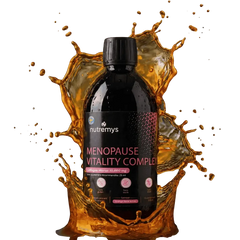
Magnesium is part of our menopause formula
Magnesium, hydrolyzed marine collagen, vitamin D3 — a synergy of active ingredients designed to support menopause with science and gentleness.
Discover Menopause Vitality →When and how to take your magnesium for optimal effect
The timing of intake, splitting, and combinations directly influence the effectiveness of your magnesium. Here is the practical guide from our supplement guide after 50.
The glycine in bisglycinate has a documented relaxing effect on the nervous system. Taking magnesium in the evening optimizes its effect on sleep quality and falling asleep. Ideal with a large glass of water, away from meals or with a light snack.
Its slight stimulating effect on transit makes it more suitable for the morning. To be taken with a meal to improve digestive tolerance. Avoid combining it at the same time with tea or coffee — tannins and caffeine reduce magnesium absorption by 40 to 60%.
The intestinal absorption capacity of magnesium saturates beyond 200 mg per dose. Taking 400 mg in a single dose means losing a good part of the dosage. Split into two doses (morning and evening) to optimize total absorption. This also applies to citrate and malate.
Vitamin B6 improves the entry of magnesium into cells — which is why many formulas combine them. Vitamin D3 and magnesium are mutually dependent: magnesium activates D3, and D3 optimizes the use of magnesium. Taking them together amplifies the effect of each.
The first effects on stress and sleep appear within 2 to 4 weeks. Benefits on bone density and vitamin D status require 2 to 3 months. Do not make the mistake of stopping after 2 weeks thinking "it doesn't work" — magnesium acts gradually. The treatment can be renewed as often as necessary, as long as the dosages are respected.
Magnesium + tea/coffee: wait at least 1 hour — tannins and caffeine reduce absorption. Magnesium + iron: they compete for absorption. Space them out by 2 hours. Magnesium + high-dose calcium at the same time: in large simultaneous quantities, they interfere with each other. The solution: calcium in the morning, magnesium in the evening.
The 5 most common mistakes with magnesium
Even with good intentions, poorly conducted supplementation can be ineffective. Here are the pitfalls to absolutely avoid.
It's the cheapest form — and the least effective. 4% absorption means that 96% of the magnesium taken passes through the intestine without being absorbed, causing digestive problems. If your pharmacist offers you a magnesium "high in" elemental magnesium, check that it's not oxide.
"500 mg of magnesium" on the label means nothing if the form is not specified. What matters is the elemental magnesium × bioavailability. Read the detailed composition: "magnesium bisglycinate providing 150 mg of elemental magnesium" tells you much more than "magnesium 500 mg".
The intestinal absorption of magnesium saturates beyond 200 mg per dose. Beyond that, the surplus is not absorbed and can cause digestive problems. Always split into 2 spaced doses (morning/evening) to maximize actual absorption.
Magnesium is not a painkiller — it works by gradually replenishing your cellular reserves. The first effects appear after 2 to 4 weeks of regular intake. Giving up after 10 days because you "don't feel anything" is the most common and damaging mistake.
Certain medications actively deplete your magnesium reserves: proton pump inhibitors (PPIs, omeprazole), diuretics (furosemide), certain antibiotics (fluoroquinolones), and stimulant laxatives. If you are taking any of these treatments, your need for magnesium is probably higher than average — and the bisglycinate form is all the more important to maximize absorption. Always inform your doctor about your supplementation.
FAQ — Frequently asked questions about magnesium
Discover our formulas including magnesium
Magnesium, marine collagen, vitamin D3 — synergies of active ingredients designed for women over 40.
Menopause Vitality → Guide to supplements after 50 →anses.fr
efsa.europa.eu
pubmed.ncbi.nlm.nih.gov/21271347
pmc.ncbi.nlm.nih.gov/PMC7468838
pubmed.ncbi.nlm.nih.gov/39252819
pubmed.ncbi.nlm.nih.gov/41601871
doi.org/10.3390/nu9050429
The information shared on this blog is for educational and informational purposes only. It does not replace medical consultation, diagnosis or treatment prescribed by a healthcare professional. If you have symptoms, are undergoing treatment or are pregnant, consult your doctor before modifying your diet or starting supplementation. Nutremys LAB food supplements should not replace a varied, balanced diet or a healthy lifestyle.
