


Pelvic Pain Without Periods: What Your Body is Really Trying to Tell You
A heavy feeling in the lower abdomen, cramps that return even though periods have been gone for months, even years. It's not in your head. It's in your tissues—and there's a precise explanation for every sensation.
These pains have a name, an identifiable hormonal cause—and concrete answers
In my practice in Paris, I see women who come for consultations with the same phrase: "My doctor told me it's normal at my age." What I systematically explain to them is that pain is never an unavoidable consequence of age. It is information.
Pelvic pain without menstruation is one of the most misunderstood symptoms of menopause and perimenopause. It affects a majority of women, can be very precisely explained by the drop in estrogen—which profoundly transforms pelvic tissues, mucosal collagen, muscle tone, and even local nerve sensitivity—and responds to targeted approaches when we take the time to understand them. This article is for informational purposes and does not replace medical consultation.
What happens in your pelvis when estrogen drops

What conventional medicine poorly explains—and what I often have to reconstruct in consultations—is that estrogen doesn't just govern the menstrual cycle. It governs tissue quality. Everywhere in the body, but particularly intensely in the pelvic area.
Estrogen stimulates collagen synthesis in uterine ligaments, maintains the thickness and elasticity of vaginal mucous membranes, regulates the density of nerve receptors in this area—and supports the tone of pelvic floor muscles. When it drops, all these mechanisms become imbalanced at the same time. This is not a symptom. It is a cascade.
What patients are never told: estrogen is the primary regulator of collagen synthesis in pelvic connective tissues. Its withdrawal weakens uterine support ligaments, thins vaginal walls, and alters the flexibility of the entire area—which generates tension, pulling sensations, sometimes permanent dull pain, regardless of any cycle.
Hormonal decline reduces blood flow and tone in the perineal muscles. I observe in many of my patients a sensation of a "pelvic floor giving way"—heaviness, pressure, pain during effort, sometimes associated with urinary leaks. This is not a matter of age. It's a matter of estrogen—and it is partially reversible with an appropriate approach.
Vulvovaginal atrophy—the clinical term for what patients describe as painful dryness, burning, itching—results directly from the loss of local estrogen. The mucous membranes lose their protective thickness, natural lubrication, and resistance. Dyspareunia, pain during intercourse, is only the most visible manifestation of this process.
What conventional medicine underestimates: visceral sensitivity significantly increases under the effect of chronic cortisol. In women undergoing hormonal transition—who are already experiencing tissue vulnerability—stress is not a "psychological" factor. It is neurobiological, and it amplifies the perception of every painful pelvic signal in a measurable way.
The drop in estrogen directly modifies the density and sensitivity of pelvic nociceptors—pain receptors. This is why stimuli that were painless before menopause become painful afterward. This is not a "functional" or psychosomatic hypersensitivity. It is a real tissue modification, documented by post-menopausal histological studies (CNGOF, 2021; INSERM, 2024). Understanding this difference radically changes how treatment is approached.
For those who wish to understand their hormonal status, our perimenopause vs. menopause guide lays out the basics with precision.
Learning to read your pain: what localization reveals

Not all pelvic pains speak the same language. Their character—localization, rhythm, intensity, what aggravates or relieves them—provides clinical information that I often find more valuable than some additional examinations. Learning to describe them precisely is already half the diagnosis.
Central heaviness, similar to periods. Residual uterine contractions under fluctuating hormonal influence
Brief sharp pains on one side. Residual ovarian activity, functional cyst or pelvic adhesion
Vaginal atrophy and thinning mucous membranes. Permanent irritation or triggered by position or intercourse
Abdominal and digestive distension. Hormonal changes slow transit and mimic pelvic pain
🔍 What localization tells you—and what you're not always told
Localized, sharp pain suggests an ovarian cyst—even after menopause, ovaries can form them. It can also correspond to pelvic adhesions or irritation of the round ligament. Our article on ovarian cysts after menopause details surveillance criteria.
This presentation—midline pelvic pain + lower back pain—is very often related to relaxation of the uterosacral ligaments, a weakened pelvic floor, or residual endometriosis that menopause has not extinguished. I also regularly see women on HRT whose endometriosis had been dormant and reappears during hormonal treatment.
The urethral and bladder mucous membranes are also estrogen-dependent. Their weakening explains recurrent cystitis, urgent urination, and frequent burning during urination after menopause—which are too quickly attributed to infections without looking for the underlying hormonal cause.
Intestinal progesterone receptors regulate digestive motility. Their loss modifies peristalsis, slows transit, and promotes bloating. These digestive pains can overlap with pelvic pains and make diagnosis difficult—the two often coexist and amplify each other.
A detail I use to guide my diagnosis: I ask the patient if the pain improves after going to the toilet. If so, the origin is primarily digestive. If the pain is indifferent to transit—or even worsened when sitting or during intercourse—the origin is more gynecological or perineal. This is not an absolute criterion, but it is useful information before any examination.
When pain requires a consultation—and quickly
The vast majority of postmenopausal pelvic pains are functional and benign. But certain signals should not be waited for or normalized. I prefer excessive caution to the opposite.
Vaginal bleeding after months or years without periods. Never insignificant. Always to be evaluated. Our article on bleeding in perimenopause specifies the nuances according to context.
Intense, persistent, or progressively increasing pain—that does not subside with heat, rest, or simple pain relievers, and that disrupts your daily life.
Fever associated with abdominal pain: the picture of a pelvic infection must be ruled out quickly.
Asymmetric abdominal swelling, a palpable mass, or unexplained weight loss. These three elements together require an immediate assessment.
Blood in the urine or recurrent urinary tract infections every four to six weeks—this is a sign of mucosal fragility that deserves local treatment, not just antibiotics in a loop.
You don't have to earn your consultation. Pain that recurs, bothers you, prevents you from sleeping or moving normally—that's sufficient medical indication. A pelvic ultrasound and a basic hormonal assessment are sufficient in the vast majority of cases to provide a clear answer. The rest is preventive medicine, not hypochondria.
The levers that truly work for relief

There is no single approach that solves everything. What I observe in my practice is that women who truly relieve their pelvic pain are those who combine several levers consistently—and who understand why each one works. Understanding changes adherence. And adherence changes results.
Pelvic yoga, Pilates, and hypopressive exercises are not "gentle gymnastics." They are neuro-muscular rehabilitation protocols. They restore perineal tone, improve tissue blood flow, reduce heaviness, and decrease the intensity of residual cramps. Combined with regular walking, their effects are measurable in six weeks. To understand the extent of what menopause does to muscle tissue, our article on muscle loss during menopause provides a useful framework.
Simple and underestimated. A hot water bottle on the lower abdomen or lumbar area relaxes uterine and pelvic muscle fibers, improves local microcirculation, and inhibits the transmission of pain signals at the medullary level. I systematically recommend 20 minutes of dry heat during acute episodes—before any oral pain reliever.
Omega-3s from fatty fish and flaxseed, magnesium from nuts and legumes, polyphenols from red fruits—all of this is not anecdotal. These are precursors of anti-inflammatory mediators that reduce central sensitization of pelvic receptors. Our guide on supplements after 50 details nutritional priorities.
Heart coherence practiced 5 minutes three times a day reduces circulating cortisol and lowers the threshold of visceral sensitization. This is not anecdotal relaxation—it is a neurobiological tool. Randomized studies show measurable effects on chronic pelvic pain after 4 to 6 weeks of regular practice.
🌿 Clinical Phytotherapy: The Plant Actives I Integrate into My Practice
I'm going to say something that many gynecologists still refuse to admit: certain plants have documented pharmacological activity on pelvic symptoms. The problem isn't their effectiveness—it's that conventional medicine doesn't know how to prescribe them, so it ignores them. That's not the same thing.
Signs You Might Benefit from Supplementation
Menopause creates a context of increased nutritional demand that diet alone rarely fully covers — especially when the body is undergoing hormonal reconfiguration. If pelvic pain is accompanied by persistent fatigue upon waking, less toned skin, hair loss, irritability, morning joint pain, or mental fog — these signals are not coincidences. They share the same underlying cause.
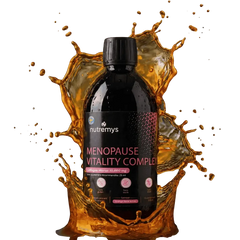
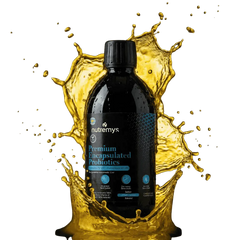
Nutremys' Menopause Vitality Complex is the formula I recommend to my patients who are looking for global support — not a medication, not a hormone substitute, but precise nutritional support for hormonal balance. Ten thousand milligrams of marine collagen to restore the trophicity of pelvic connective tissues, clinical phytoestrogens (red clover, dong quai, maca), magnesium, vitamins D3, K2, B6, B9, B12, hyaluronic acid, CoQ10. In liquid form — up to three times higher bioavailability than capsules. It's not approximate. These are carefully chosen dosages. For intestinal microbiota support — often disrupted during hormonal transition and involved in visceral pain perception — Nutremys' Encapsulated Probiotics offer complementary support. Our comprehensive guide on probiotics explains the mechanisms in detail.
Occasional
Recurrent
Debilitating
FAQ — Questions My Patients Ask Me Most Often
inserm.fr/dossier/menopause
cngof.fr
ameli.fr
acog.org
doi.org/10.3390/nu16010001
doi.org/10.1080/13697137.2019.1571878

Gynecologist practicing in Paris for 18 years, specialized in women's hormonal health, perimenopause and menopause. At Nutremys LAB, she brings her medical perspective to every product we offer.
Learn more →


The information shared on this blog is for educational and informational purposes only. It does not replace medical consultation, diagnosis or treatment prescribed by a healthcare professional. If you have symptoms, are undergoing treatment or are pregnant, consult your doctor before modifying your diet or starting supplementation. Nutremys LAB food supplements should not replace a varied, balanced diet or a healthy lifestyle.
