



Muscle Loss During Menopause: Why It Happens and How to Respond Intelligently
Your body is changing, your muscle tone is decreasing — sometimes without the number on the scale moving. This is not a lack of willpower, nor is it inevitable. It's biology. And science offers concrete answers.
At a Glance
- Falling estrogen levels directly reduce the body's ability to build and maintain muscle.
- Muscle loss can occur as early as perimenopause, often with stable weight — invisible on the scale.
- Regular strength training is the #1 lever for preserving muscle tone during menopause.
- Sufficient protein, quality sleep, and stress management decisively complement this foundation.
- Targeted supplementation can support this terrain when diet and lifestyle are no longer sufficient.
What's Really Happening in Your Body During Menopause
Muscle loss during menopause doesn't happen overnight. It sets in gradually, often silently, and sometimes begins several years before periods stop — as early as perimenopause. Before taking action, it's essential to understand what's truly at play physiologically.

The Central Role of Estrogen in Muscle
Estrogen doesn't just regulate the menstrual cycle. It plays an active role in preserving muscle mass, fiber quality, recovery speed after exertion, and the muscle tissue's ability to regenerate. When its levels drop during menopause, several mechanisms are simultaneously triggered:
Why the Scale Doesn't Tell the Whole Story
This is one of the most puzzling phenomena of menopause: the scale hasn't moved, yet the body feels different. Clothes fit differently, some areas appear less firm, the silhouette transforms.
What's actually happening is a silent body recomposition: muscle — dense, active tissue that shapes the body — is gradually replaced by fat mass, without the overall weight changing. This phenomenon goes unnoticed on the scale but has a very real impact on muscle tone, energy, and metabolism.
Daily Consequences: More Than Just a Matter of Silhouette
Muscle loss during menopause isn't just about what you see in the mirror. It's felt concretely, in everyday actions, energy levels, and even mood. Many women attribute these feelings to stress or age, without realizing they are directly linked to decreased muscle mass.

Fatigue, Decreased Muscle Tone, and Altered Silhouette
When muscle decreases, the simplest movements require more effort. Carrying groceries, climbing stairs, holding a prolonged posture: these activities that once seemed trivial gradually become more demanding. The visible loss of tone in the arms, thighs, or abdomen can create a difficult disconnect between one's inner feeling and the image reflected in the mirror.
Accelerated Fatigue
Less muscle means less energy efficiency. Fatigue sets in earlier, even for familiar efforts.
Decreased Strength
Carrying, lifting, stabilizing: daily functional capacities gradually diminish.
Slowed Metabolism
Muscle consumes energy at rest. Less muscle = slower metabolism and easier storage.
Slowed Metabolism: Eating "Like Before" No Longer Works
Muscle is a metabolically very active tissue. Its decrease mechanically slows down the basal metabolism: energy needs drop, the body stores fat more easily — especially in the abdominal area — and dietary deviations "show" more quickly.
Why Cardio Alone Is No Longer Enough During Menopause
For years, women were told that moving, sweating, and burning calories was the key to staying in shape. During menopause, this logic quickly shows its limits — not because exercise becomes useless, but because the body's priorities change profoundly.
| Type of Exercise | Impact on Muscle | Suitable for Menopause? |
|---|---|---|
| Frequent intense cardio | Low muscle stimulation, high physiological stress | Only as a supplement |
| Adapted strength training | Direct signal for muscle preservation | ✅ Absolute priority |
| Active walking / mobility | Functional maintenance, stress management | ✅ Excellent complement |
| Yoga / Pilates | Deep muscle tone, posture, recovery | ✅ Ideal in synergy |
Strength training sends a clear message to the body: muscle is useful, it must be preserved. Regular practice — 2 to 3 sessions per week, at sufficient intensity but without exhaustion — helps preserve muscle mass, support basal metabolism, and improve posture, stability, and confidence in physical abilities.
What Really Supports Muscle During Menopause (Beyond Exercise)
Strength training is essential, but it cannot bear the entire burden alone. The body needs a favorable environment to preserve and rebuild muscle tissue. Without this support, even a well-designed practice can become less effective, or even exhausting.

Proteins, Sleep, and Stress: The Trio That Makes a Difference
During menopause, the body's needs evolve, particularly for muscle repair and recovery. Three pillars prove decisive:
Proteins
Insufficient intake — or concentrated on a single meal — directly limits muscle synthesis. EFSA recommends regular distribution throughout the day. Discover the 5 signs of protein deficiency to check if your diet meets your needs.
Sleep
It's during rest that the body repairs and strengthens muscle tissue. Fragmented sleep directly reduces recovery capacity and accentuates fatigue.
Chronic Stress
High cortisol levels hinder recovery and disrupt an already fragile hormonal balance. During menopause, this cycle can become self-perpetuating if not addressed.
A Consistent Approach Rather Than Isolated Strategies
Working solely on exercise, or solely on diet, often yields partial results. It's the overall consistency — movement, nutrition, rest, stress management — that allows for sustainable support of muscle mass during menopause. Discovering the essential supplements after 50 can usefully complement this holistic approach.
Signs You Might Benefit from Supplementation
Even with a careful diet and regular exercise, the hormonal context of menopause can create needs that diet alone doesn't always cover. Certain signals deserve to be taken into account:
Persistent fatigue despite rest
When sleep is no longer enough to restore energy, the body may be lacking essential micronutrients for cellular energy production.
Decreased muscle tone despite exercise
If strength training no longer produces the expected results, the hormonal and nutritional environment may be hindering the muscle's response.
Long and uncomfortable recovery
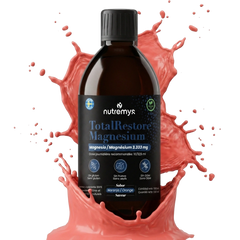
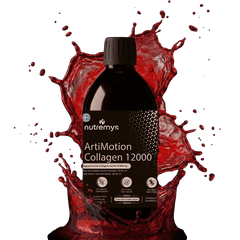
Abnormally slow recovery after exercise can indicate an increased need for collagen, magnesium, or essential amino acids.
Cycles of stress and fatigue that chain together
When the body struggles to get out of "survival" mode, a formulation adapted to the menopausal transition can offer real foundational support.
This article is for informational purposes only and does not replace medical advice. If you have any doubts about your symptoms, consult a healthcare professional.
Support Your Muscle Capital During Menopause
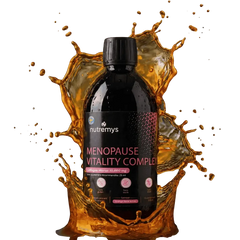
The Menopause Vitality Complex is formulated specifically for women in menopausal transition. Hydrolyzed marine collagen, vitamins, and synergistic botanical active ingredients — for fundamental support that respects your physiology.
Discover the Menopause Vitality ComplexFrequently Asked Questions
Scientific Sources
- Hansen M. et al. (2014). Role of estrogens in the regulation of muscle mass and function. Journal of Clinical Endocrinology & Metabolism. PubMed
- Maltais M.L. et al. (2009). Changes in muscle mass and strength after menopause. Journal of Musculoskeletal and Neuronal Interactions, 9(4):186-97.
- EFSA Panel on Dietetic Products (2010). Scientific Opinion on protein and maintenance of normal muscle mass. EFSA Journal. EFSA
- Bhasin S. et al. (2006). Sex hormone–binding globulin, but not testosterone, is associated with lean body mass, fat mass and bone mineral density in older women. Journal of Clinical Endocrinology & Metabolism.
- Stachenfeld N.S. (2008). Sex Hormone Effects on Body Fluid Regulation. Exercise and Sport Sciences Reviews, 36(3):152–159.
Related articles

The information shared on this blog is for educational and informational purposes only. It does not replace medical consultation, diagnosis or treatment prescribed by a healthcare professional. If you have symptoms, are undergoing treatment or are pregnant, consult your doctor before modifying your diet or starting supplementation. Nutremys LAB food supplements should not replace a varied, balanced diet or a healthy lifestyle.
